

A Painful Past Cannot Be Erased
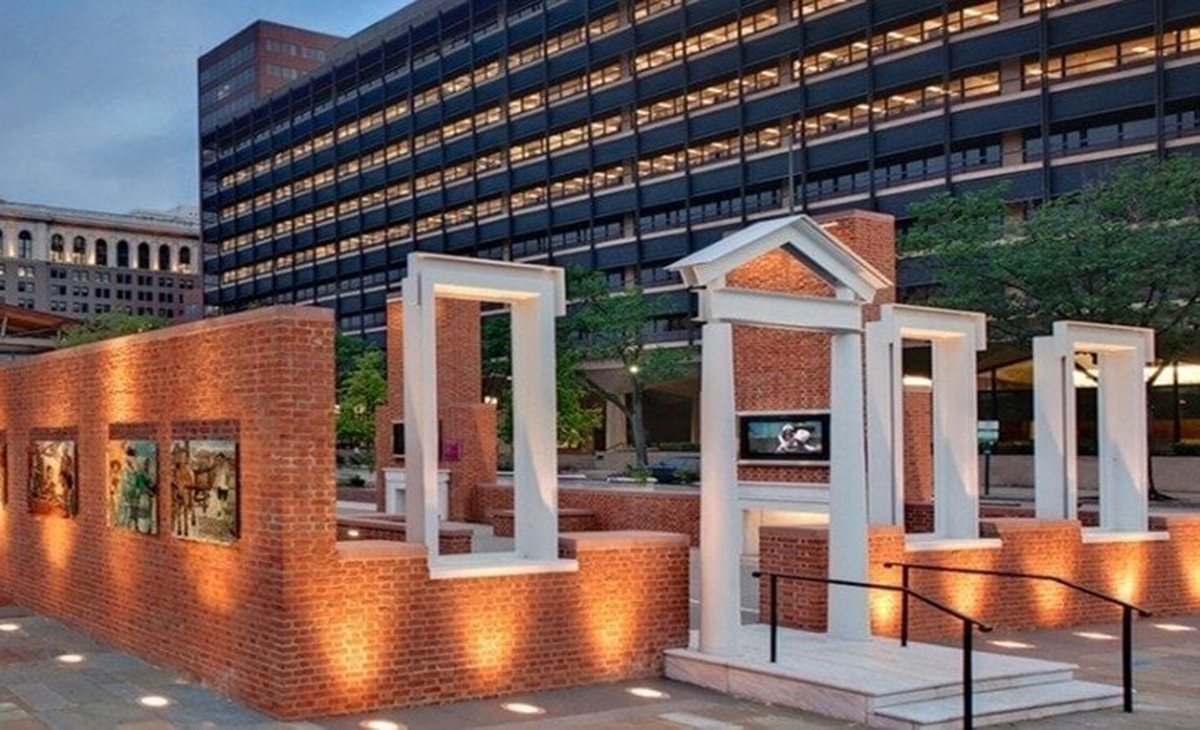
A Closer Look at the President’s House
UPDATE: On February 16th, a federal judge ruled that the exhibit had to be restored, saying that the move to strip the historical exhibit echoed George Orwell’s dystopian novel “1984.” Then, On February 17th, the federal government appealed the judge’s order to restore the President’s House.
The President’s House is an outdoor exhibit that examines the paradox between slavery and freedom in the new nation. Presidents Washington and Adams, and their households, once lived and worked at a house on this site. Although the house was demolished in 1832, some of its stories were preserved through videos shared from the perspective of enslaved individuals who lived and worked here, and text panels shed light on everything from visiting tribal delegations to the work of the executive branch.
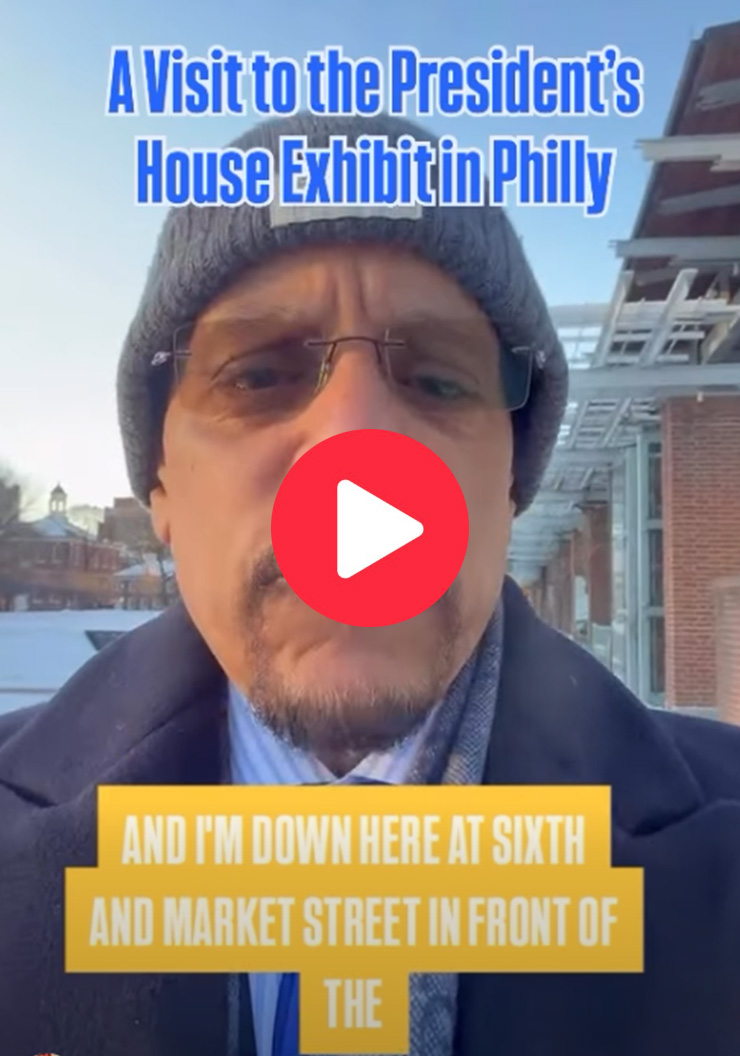
It’s located at the corner of 6th and Market Streets.
In late January 2026, the Trump Administration had the informational signs removed.
The City of Philadelphia responded by suing the Department of the Interior and the acting director of the National Park Service for altering the exhibit without any consultation or notice to city officials. The suit, filed in federal court, seeks a preliminary injunction to restore the exhibits at the President’s House Site, part of Independence National Historical Park.
A federal judge overseeing the case ruled that the federal government must continue to store the displays safely so they are not damaged.
Senator Hughes recently visited the President’s House Exhibit to see for himself what had happened to the historical site.
Black History at Home
Black history is all around us. There’s endless amount of resources that can teach us about our past and the tremendous contributions African Americans have made to our world.
Take a look at some of Senator Hughes’ favorite pieces of art, photos, and mementos that celebrate the rich history of Black Americans.
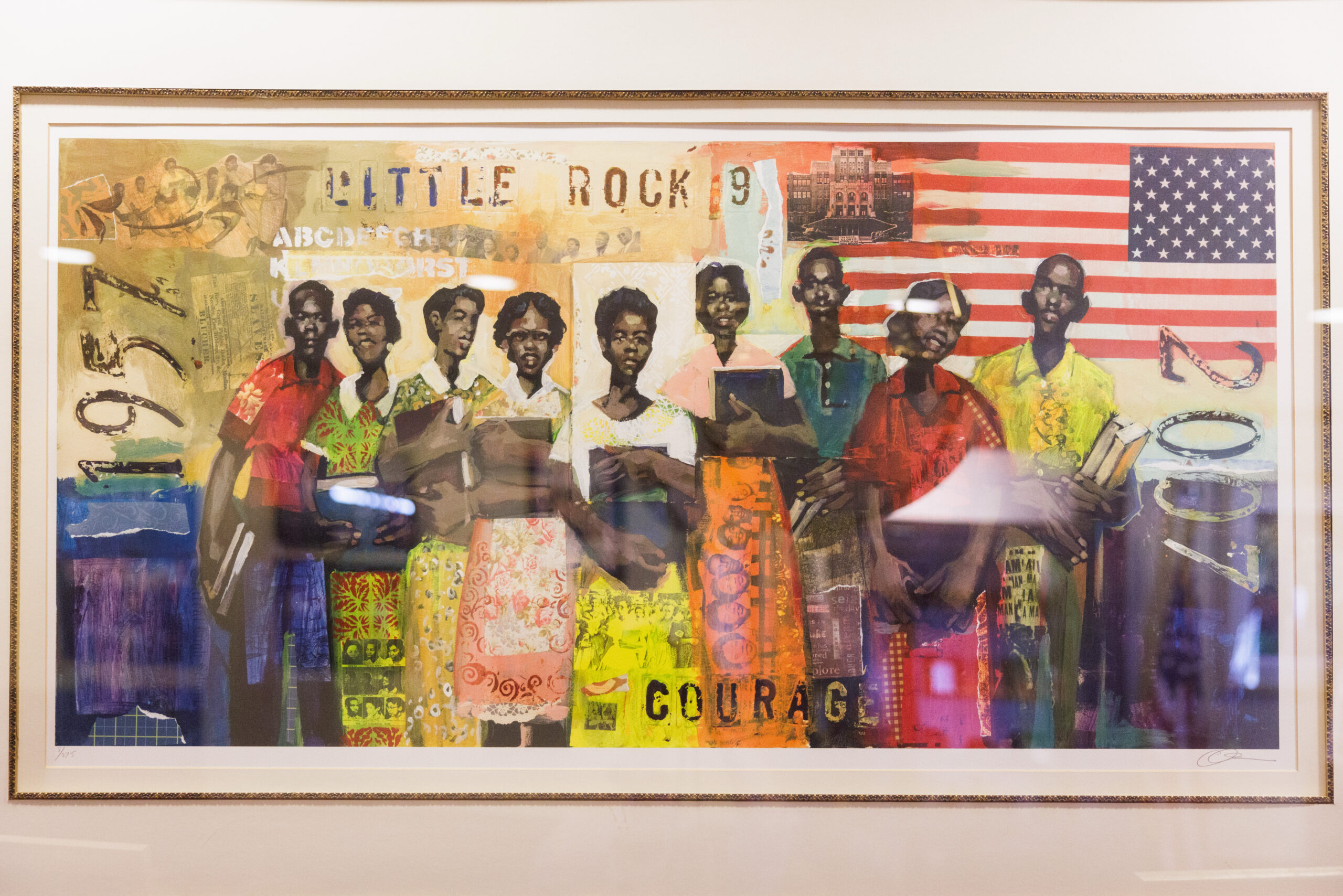
This painting is an important commemoration of the Little Rock Nine, a group of nine African American students who enrolled at Little Rock Central High School in 1957. Upon their enrollment, the students were prevented from entering the school, which was still racially segregated, by Arkansas Governor Orval Faubus. The crisis in Little Rock became so tense that President Eisenhower had to intervene in order for the students to be allowed to attend school.
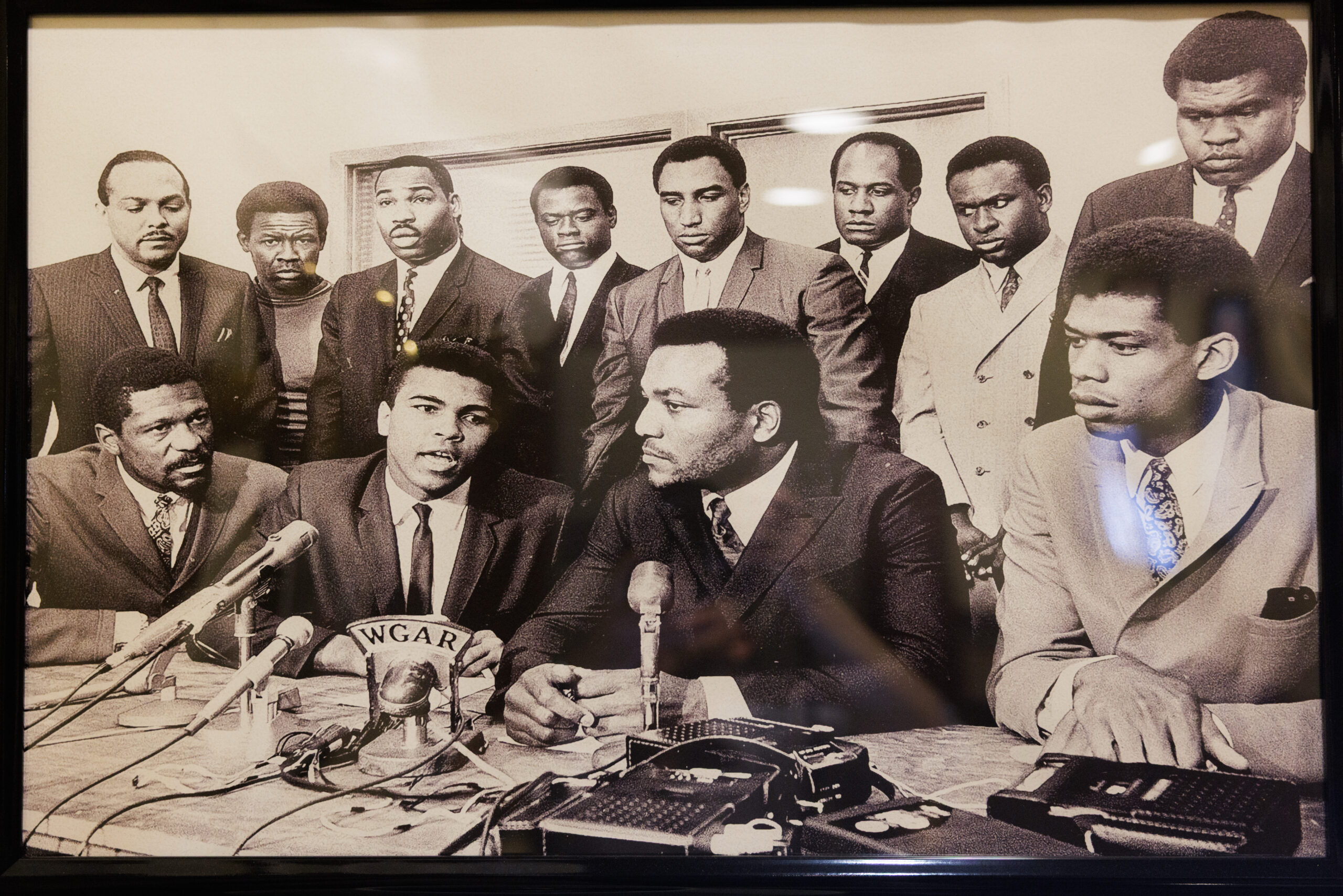
In this photograph taken in 1967, Muhammad Ali and a group of African American athletes are holding a press conference following Ali’s announcement that he would be refusing to fight in Vietnam. To Muhammad Ali, the Vietnam War was akin to genocide. He also cited the treatment of people of color here at home as part of his reasoning, stating, “Why should they ask me to put on a uniform and go 10,000 miles from home and drop bombs and bullets on Brown people in Vietnam while so-called Negro people in Louisville are treated like dogs?”. Ali was convicted for draft dodging just 14 days later.
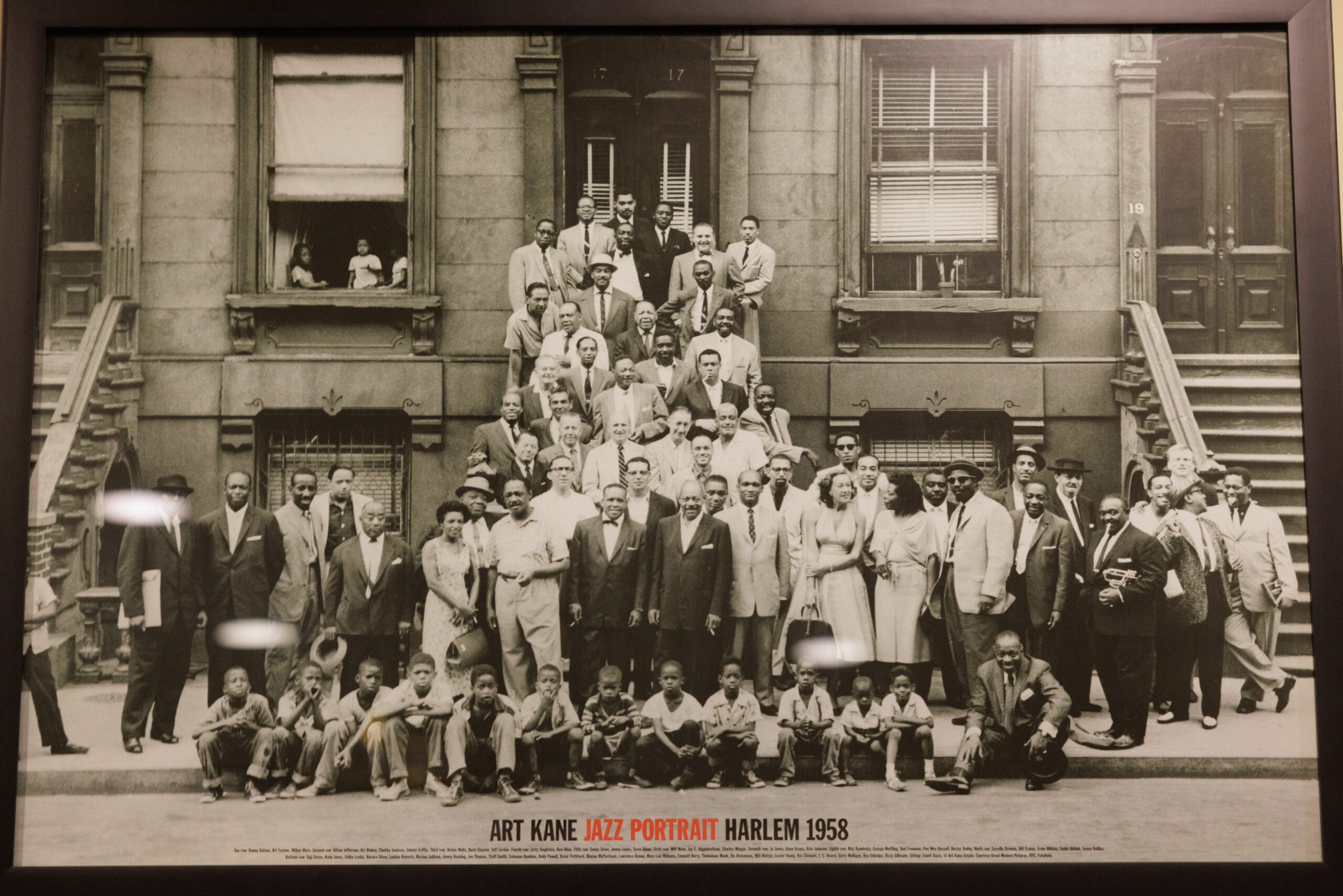
This photograph of 57 jazz musicians in Harlem, New York was taken in 1958 and has been dubbed “the most iconic photograph in jazz history”. This famous image was published as the centerfold of Esquire’s 1959 “Golden Age of Jazz” issue and includes jazz legends such as Count Basie, Dizzy Gillespie, Sonny Rollins, Charles Mingus, and Art Blakely. Sonny Rollins, the last living musician pictured, gave his perspective on the photo’s significance in 2024: “It just seemed like we weren’t appreciated … mainly because jazz was a Black art. I think that picture humanized a lot of the myth of what people thought jazz was.”
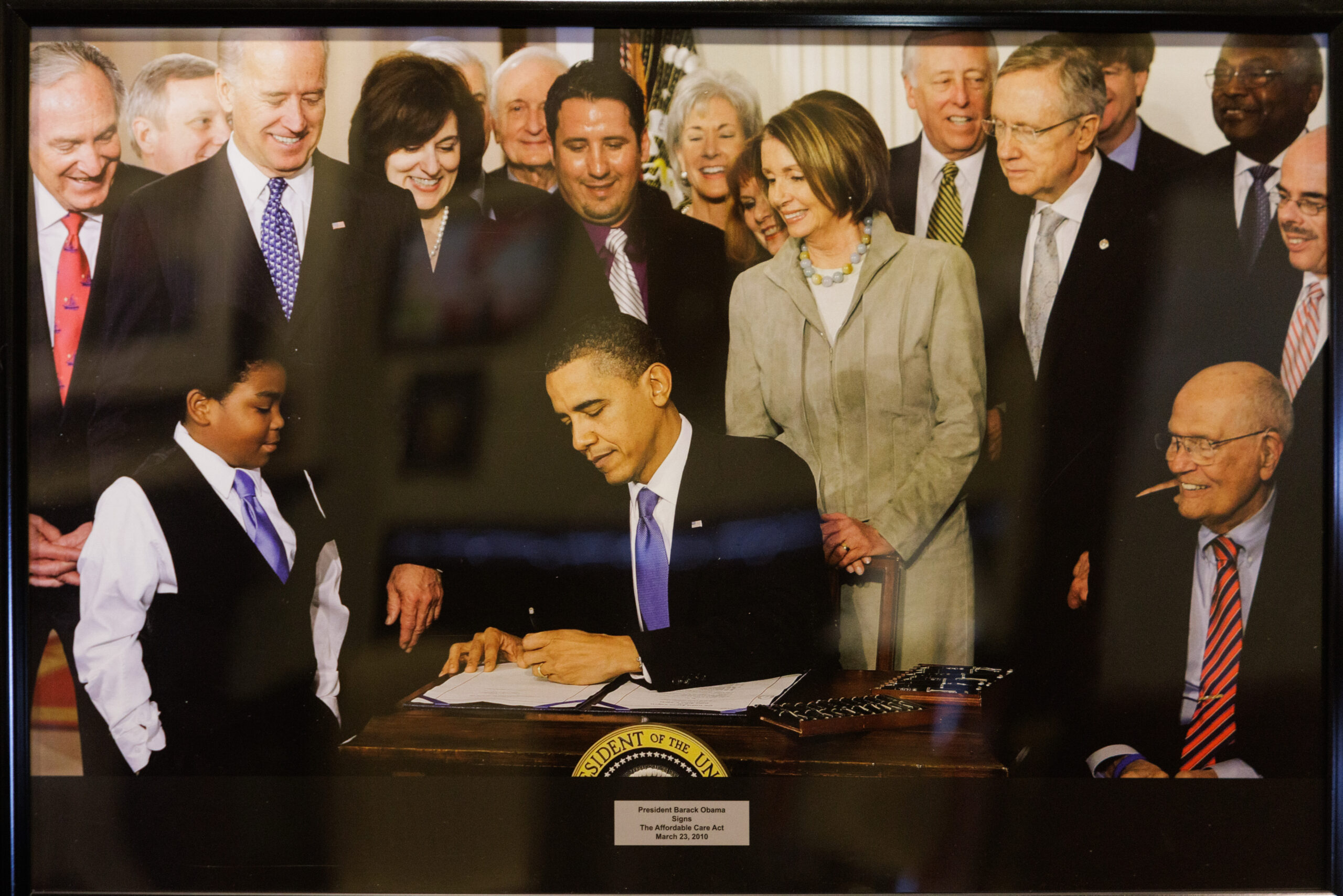
In this photo, America’s first Black president, Barack Obama, signs the Affordable Care Act in 2010. The Affordable Care Act (ACA) has been lauded as the most important piece of legislation since Medicare and Medicaid. In addition to expanding healthcare access to 40 million Americans, the ACA expanded Medicaid to cover 21 million low-income adults under 65 and protected 133 million Americans with pre-existing conditions from losing health insurance.
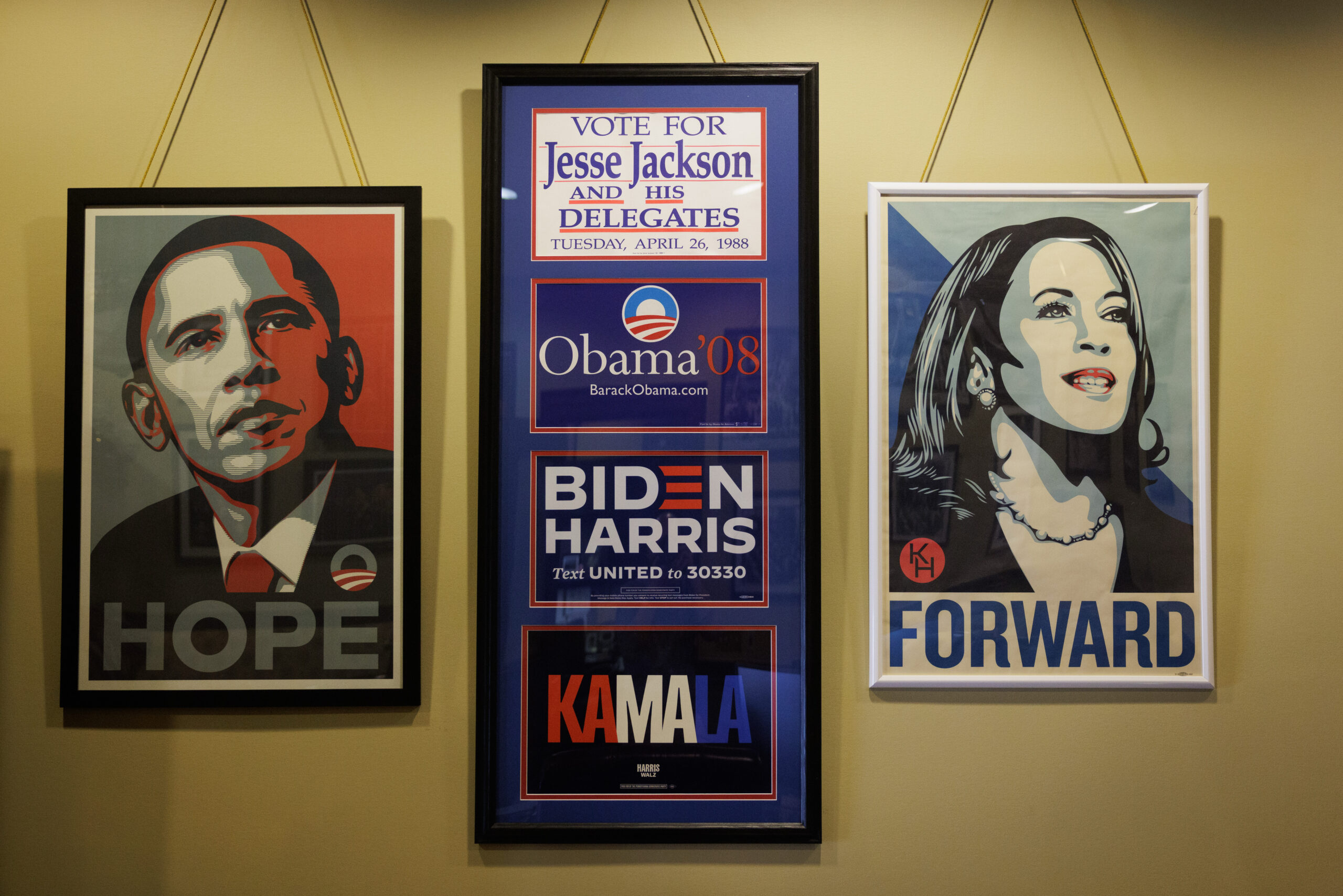
These posters commemorate the history-making presidential campaigns of three powerful Black candidates: President Barack Obama, Vice President Kamala Harris, and Rev. Jesse Jackson. Barack Obama was able to win his campaign and be elected as President of the United States in 2008 and 2012, making him America’s very first Black president. Kamala Harris, while unsuccessful in her presidential campaigns, shattered glass ceilings everywhere when she became the first Black woman to serve as Vice President of the United States. And Rev. Jesse Jackson, famous civil rights leader, proudly launched two powerful presidential campaigns in 1984 and 1988, decades before Barack Obama’s success.
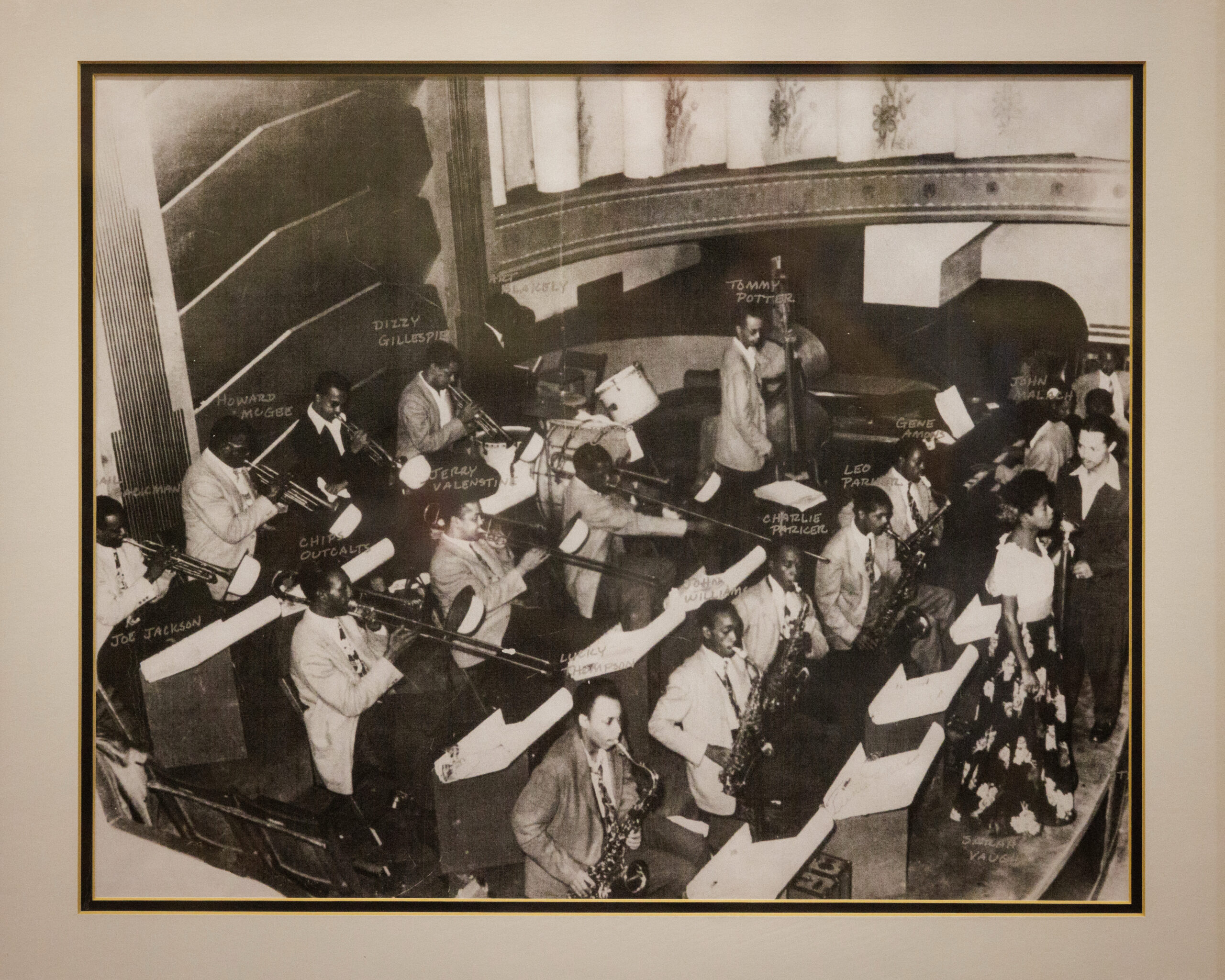
This iconic photo shows Billy Eckstine conducting his band on stage at the Aragon Ballroom in Pittsburgh, Pennsylvania in 1944. Eckstine was a legendary jazz singer and band leader during the swing and bebop eras. In 2019, Eckstine was posthumously awarded the Grammy Lifetime Achievement Award for his outstanding artistic significance to the field of music and recording.